In search of Swiftboat revenge (still)
 In the name of the troops, the LA Times smears most highly decorated living American serviceman
The Left loads up, takes careful aim...and hits themselves square in the collective foot (again)
 It’s no secret that the Democrats and the rest of the anti-war Left are still upset over the “swiftboating” of their Presidential nominee in 2004. Heck, they’re not over the 500 votes and hanging chads in Florida yet, so it would be pretty foolish to expect them to get over a bigger loss four years later – especially when such a large part of it (in their minds) stemmed from some squeaky-wheel veterans who just wouldn’t shut up and let their Vietnam veteran candidate continue to portray himself as a military hero.
As the Iraq war (and the debate surrounding it) has raged on in the years since, the Left has been trying harder and harder to claim the moral high ground with regard to the treatment and use of US troops, both by championing the few it can find who oppose the War on Terror, and by attempting to marginalize those who dare speak out against them.
A major problem with this strategy, though, comes from the overall ignorance on the part of the anti-war, anti-military Left to nearly any aspect of military or veterans’ affairs. From championing the likes of John Murtha (D-PA) as a paragon of patriotism and as an idolized military hero, to ignoring those real heroes whose politics don’t quite line up with the Democratic party line, the Left suffers from a fundamental lack of subject matter understanding, which, combined with the employment of the usual ham-handed tactics, often cause the Left’s continuous attempts to re-frame the debate surrounding America’s national security, the War on Terror, and respect for US troops to result simply in further setbacks to their cause.
The L.A. Times recently provided an excellent example of the Leftist tendency to load up their assault rifle, take careful aim at the right, and then deposit round after round in their own foot.
Last week, Times columnist Rosa Brooks, in a fit of continued rage over the use of John Kerry’s own words and actions to sink his presidential bid (i.e., the right’s “swiftboating” of him and his candidacy), lashed out at a panel which had appeared at CPAC to discuss “The Left's Repeated Campaign Against the American Soldier.” Her invective included calling panel participants “key” members of “Swift Boat Veterans for Truth, the right-wing goon squad whose defamatory insinuations helped sink John Kerry's presidential campaign.”
Her column, entitled “The Lunatic Right Returns,” continued:
What's depressing about the reemergence of the Swifties, though, is that it's symbolic of the increasing takeover of the “conservative” movement by unprincipled, right-wing extremists.
Among these “extremists” Ms. Brooks so loathes (and lumps in as a "key discredited Swift boater") is retired Air Force Colonel George E. “Bud” Day. Who is that, you ask? Well, you might remember the name if you were alive during Vietnam, or if you pay any attention whatsoever to military history.
However, if you don’t know who he is, here’s a down-and-dirty on a real American hero. According to the USAF’s Air University website, Colonel Day earned “nearly 70 decorations and awards, of which more than 50 [were] for combat” (and one was the Medal of Honor). His logged 5,000 career flying hours, including combat duty in WWII, in Korea, and in Vietnam. After being shot down in 1967, Day suffered as a POW for 67 months (that's five and one-half years for the mathematically challenged), with a two week “respite” after escaping from the North Vietnamese, during which, despite serious injury, he evaded the enemy all the way back into South Vietnam, “earning the distinction of being the only prisoner to escape from North Vietnam” - only to be recaptured and imprisoned until March 1973.
 Colonel Day embodies the true essence of the phrase “Return with Honor,” which is why, in 1997, the Air Force named its newest SERE (Survival, Evasion, Resistance, and Escape) school building after him.
As “Jason” from the weblog Iraq Now says, “This is the man who LA Times columnist Rosa Brooks calls an ‘unprincipled, right-wing extremist’.”
But Ms. Brooks continues:
It's not hard to visualize the right-wing talking points that will emerge from this [panel]. The Swift boaters will be dusting off their 2004 scripts and reaching back still further to dredge up their Vietnam-era notes. Expect to see all the old myths revived: The antiwar left spits on returning troops and gives aid and comfort to the enemy. Oh, John Murtha, why do you hate our brave troops?
The antipathy and condescension for those troops who simply aren’t “enlightened” enough to renounce violence and become dyed-in-the-wool anti-war Liberals drips from Ms. Brooks’s words, as she forsakes facts for the sake of a good meme. The degradation of our troops as they returned home from Vietnam – a proud chapter in the history of America’s anti-war, anti-military lefties – has been treated by Democrats increasingly like a preposterous myth propagated by the chickenhawking Right of late, despite the fact that such instances of troops being assaulted, spit on, and otherwise defiled are a very real part of the historical record.
As to “brave John Murtha,” whom liberals hold up as their example of Democratic military heroism, “Jason” has this to say:
Oh, and I can't say that John Murtha hates our troops. He just wants them to lose, by stripping them of needed funding in the heat of battle - funding which translates to such minor items as equipment, ammunition, reinforcements, reserves, and food.
But facts, as always, get too much in the way of a good story – and of a good expression of hatred. Therefore, Ms. Brooks simply can’t be expected to abide by them.
Though she and her employers at the Times doubtless published this column with the belief that none would question their yeomen’s work on the part of the anti-war Left, they actually accomplished just the opposite. As “Jason” so aptly puts it:
“In the process of disparaging a panel entitled "The Left's Repeated Campaign Against the American Soldier" [Rosa Brooks] manages to serve up – drumroll, please – an ignorant smear campaign against America's most decorated living serviceman. (emphasis added)
If the Times has an ounce of conscience, they will disavow Ms. Brooks's comments immediately, if they do not go further (as they should) and remove her from the payroll. Furthermore, Senator Kerry and Representative Murtha need to repudiate this slander of a fellow Vietnam veteran – as does every other Democrat politician who claims to care about America and her troops (and for whom Ms. Brooks attempts to speak).
The clock is ticking. We are waiting. Surely the Left will defend a veteran and a real hero (who does not share their political views) as quickly, and with as much gusto, as they have a less-distinguished one of their own in the past.
Surely they will repudiate this hackish attempt to marginalize non-Liberal servicemen and to ridicule the idea that the Left would ever slander the troops, which consisted (in typical lefty fashion) of a slandering of the most highly-decorated living American serviceman.
Surely they will do the right thing in this situation.
Won't they?
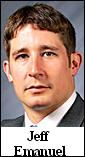
Mr. Emanuel, a special operations military veteran, is a leadership fellow with the Center for International Trade and Security at the University of Georgia, where he also studies Classics. In addition, he is a contributing editor for conservative weblog RedState.com, and is a columnist for the Athens, GA Banner-Herald newspaper.

Labels: Heroism, Liberals, Media, Profiles in Courage, Scandals, War
Permalink |
|


Honorable Americans, Every One

 Michael Monsoor, of Garden Grove, California, felt the same call to serve his country that had led his father and brother into the Marine Corps. However, he was pulled in a different direction than his family members: he was drawn to the US Navy, not out of a desire to serve in the fleet, but out of a burning ambition to serve as a Navy SEAL, one of America's Special Operations elites.
 Monsoor succeeded at SEAL training, and was assigned to Coronado, CA. It was in Iraq, though, as he fought alongside his teammates, that he repeatedly demonstrated the bravery and heroism which are characteristic of America's fighting men and women, and it was in that same country, on September 29, 2006, that the 25-year-old gave his life to protect them.
According to the Navy's narrative:
On 29 September, Monsoor was part of a sniper overwatch security position in eastern Ramadi, Iraq, with three other SEALs and eight Iraqi soldiers. …Ramadi had been a violent and intense area for a very strong and aggressive insurgency for some time.
[…]
An insurgency fighter…threw a fragment grenade into the overwatch position which hit Monsoor in the chest before falling in front of him. Monsoor yelled "Grenade!" and dropped on top of the grenade prior to it exploding. Monsoor's body shielded the others from the brunt of the fragmentation blast and two other SEALs were only wounded by the remaining blast.
The most important part of the incident to understand, in order to appreciate the magnitude of Monsoor's sacrifice, is this: due to the orientation of the room, and the location of its lone exit, he was the only person who could have escaped. Doing so, though, would have meant abandoning the others in the room to grievous injury or, more likely, to death. Knowing both courses of action, and the consequences of each, he had to make a split-second decision.
As was so eloquently and succinctly put by the Chicago Tribune’s Kristen Scharnberg, “The men who were there that day say they could see the options flicker across Michael Monsoor's face: save himself or save the men he had long considered brothers.
“He chose them.”
In April of 2004, 24-year-old Marine Corporal Jason Dunham made a similar sacrifice, as he used his body to shield fellow Marines from an exploding grenade. His father described his son’s decision to give his life for his comrades thus: “When you are in a war situation, that guy beside you is your brother or sister. And I think that most of us would give up our lives for our family.”
Over two years later, Dunham was posthumously awarded the Medal of Honor for his selfless, heroic sacrifice. Now, three months after he gave his life for his teammates, Monsoor has been nominated for a Medal of Honor of his own.
Most recently, 19-year-old PFC Ross McGinnis saved the lives of four of his comrades in similar fashion. On December 4, when manning a turret-mounted machine gun, a grenade was thrown into McGinnis’s Humvee. Rather than escape through the vehicle’s turret, he threw himself into the truck and on top of the grenade, absorbing the blast.
“He was that kind of person,” a fellow infantryman said of McGinnis. “He would rather take it himself than have his buddies go down.” McGinnis was posthumously awarded the Silver Star, and has also been submitted for the Medal of Honor.
The mindset that compels a man to put himself into harm’s way for the purpose of saving another is difficult to describe; however, it is a defining characteristic of the true warrior who has faced combat, and who has experienced the reality of having his life entirely in the hands of the men next to him, while having each of those in his own hands.
According to Joseph Blake, a sociologist who has researched the act of soldiers throwing themselves on grenades, “A combat situation has not a whole lot to do with patriotism or the folks back home...They are fighting for their buddies. They don't want to let their buddies down.”
Said Monsoor's mother, “We just knew that if Mike was put in a situation like he was, he wouldn't hesitate.”
And he didn’t. According to the AP, “One SEAL lieutenant…watched Monsoor shield him and others from exploding hot metal …when the grenade blew up their sniper position. ‘Mikey had the best chance of avoiding harm altogether,’ said the officer. ‘But he never took his eye off the grenade’.”
A mere two weeks from redeploying home from Iraq himself, Monsoor gave up his life so that the men around him would have a chance to return to their families.
This holiday season, as we enjoy ourselves, our loved ones, and our lives, we should pause for a moment to reflect upon the sacrifices of men like these, who willingly gave up their lives and their futures – the ability to see their families again, to spend time with their loved ones, to ever have families of their own – so that each man with them might have the chance to do so.
There truly can be no greater love, no more heroic act, than this. The men whose lives were saved by the direct intervention of Mike Monsoor, Jason Dunham, Ross McGinnis, and others will carry the burden of gratitude with them to the grave, and beyond.
However, the scope of these men's sacrifices is far greater than the relatively small number of people who were spared by their action. Every one of the soldiers, sailors, airmen, and Marines who has died in combat has done so to save each of us; the bullets they have taken, and the grenades they have thrown themselves upon, have been aimed, indirectly, at every one of us, and those who have felt their impact, and have given their lives in battle, have done so that we may live.
So, to these men and women, we owe – at the very least – our eternal gratitude, and an undying commitment to never take for granted those things which we, due to their sacrifices, can continue to enjoy, but which they, due to those same sacrifices, will never again be able to do.
The sacrifices of these true warriors did not make them heroes. It simply demonstrated what heroic men they were all along.

Labels: Profiles in Courage, War
Permalink |
|
The true meaning of Heroism, part 3
"He had time to jump out of the truck. He chose not to...He gave his life to save his crew."
 |
When in kindergarten, Rebecca McGinnis said, her son "drew a soldier...when he was supposed to picture what he wanted to be when he grew up." At the age of 18, the ambidextrous McGinnis was in training to be an infantryman, where he qualified as a sharpshooter with both left and right hands. Shortly thereafter, he was assigned to Charlie Company, 1st Battalion, 26th Infantry Regiment, based in Schweinfurt, Germany, where he was the youngest soldier in the unit.
In August of this year, he found himself in Iraq, patrolling the streets of Baghdad, and in November, immediately following the Saddam-trial verdict, he helped forcefully put down a premeditated violent uprising by insurgents.
McGinnis distinguished himself so greatly in his first three months in Iraq that a waiver was requested - and granted - to promote him to Specialist (E-4) despite lacking the requisite time in service.
On December 4, 2006, at the age of 19, Ross McGinnis traded his life for the lives of four members of his squad, when he jumped on a grenade and shielded them from the blast. He remains 19 years old forever.
On the last day of his life, PFC McGinnis was manning the .50-caliber machine gun mounted in a turret atop his Humvee, and serving as the rear guard in a mounted combat patrol against insurgents and sectarian fighters. As the convoy made a turn onto a narrow street, a fragmentation grenade was thrown from the rooftop of an adjacent building. According to the official report, "[McGinnis] immediately yelled "Grenade!" on the vehicle's intercom system to alert the four other members of his crew...[he] made an attempt to personally deflect the grenade, but was unable to prevent it from falling through the gunner's hatch."
 For his subsequent actions, McGinnis was posthumously awarded the Silver Star, the military's third-highest award for combat heroism (specifically, for "gallantry in action against an enemy of the United States").
According to platoon sergeant Cedric Thomas, who was commanding the vehicle, "McGinnis yelled 'Grenade...It’s in the truck!’...I looked out of the corner of my eye as I was crouching down and I saw him pin it down.
"He had time to jump out of the truck. He chose not to."
Thomas reportedly "remembered McGinnis talking about how he would respond in such a situation. McGinnis said then he didn’t know how he would act, but when the time came, he delivered."
"He gave his life to save his crew," Thomas said. "He's a hero. He’s a professional. He was just an awesome guy."
McGinnis's Silver Star citation recounts the events in greater detail:
His Platoon Sergeant, the truck commander, was unaware that the grenade physically entered the vehicle and shouted "where?" to PFC McGinnis. When an average man would have leapt out of the gunner's cupola to safety, PFC McGinnis decided to stay with his crew. Unhesitatingly and with complete disregard for his own life he announced "the grenade is in the truck" and threw his back over the grenade to pin it between his body and the truck's radio mount.
When the grenade detonated, PFC McGinnis absorbed all lethal fragments and the concussion with his own body killing him instantly. His early warning allowed all four members of his crew to position their bodies in a protective posture to prepare for the grenade's blast. As a result of his quick reflexes and heroic measures, no other members of the vehicle crew were seriously wounded in the attack. His gallant action and total disregard for his personal well-being directly saved four men from certain serious injury or death.The tremendous sacrifice involved in such a gallant, heroic act is indescribable. At the age of 19, the youngest man in his Company, Ross McGinnis willingly forfeited his own life, his own desires, and his own future so that his comrades - those with whom he had been facing enemy fire - could have them.
McGinnis exemplified a mindset which is both incomprehensible and unimagineable to all who have not been in such a situation. When faced with a life or death situation, with an escape route both simple and available, and against every instinct of self-preservation, he chose death - and, in doing so, allowed the four other men with him to keep their lives.
"He was that kind of person," said Michael Blair, a fellow 1-26 infantryman. "He would rather take it himself than have his buddies go down."
We all take comfort, solace, and heart in the knowledge that there are men like Ross McGinnis in this great country, who are willing to give everything for their fellow man. However, our detachment from the situation allows us to contemplate such things far more abstractly than we would be able to were we directly involved.
For what consolation can a grieving mother take, knowing that she will never again greet the son she raised from infancy; that never again will he be home for Christmas, never again will she hear his voice on the phone, never again will she hold him in her arms? What comfort can a father take in knowing that his only son, not yet out of his teenage years, has predeceased him - that he must linger, while the young flesh of his flesh has perished?
This is a question that has been contemplated since time immemorial. Words of comfort, which are more than difficult to come by in such a situation, come to mind in the form of a letter written to one such parent many, many years ago. The writer was Abraham Lincoln, President of the United States, and the recipient was Mrs. Lydia Bixby, who had lost five - five - sons to the bloody fighting of the American Civil War. Mr. Lincoln wrote, on November 21, 1864:
"I feel how weak and fruitless must be any words of mine which should attempt to beguile you from the grief of a loss so overwhelming. But I cannot refrain from tendering to you the consolation that may be found in the thanks of the Republic they died to save. I pray that our Heavenly Father may assuage the anguish of your bereavement, and leave you only the cherished memory of the loved and lost, and the solemn pride that must be yours, to have laid so costly a sacrifice upon the altar of Freedom."We can only hope and pray that when Tom and Rebecca McGinnis think of their son Ross, which they will always do with a sorrow that none but a parent can know, they will dwell not on the life that was lost, but on those that were saved - and that they focus not on the act that took his life, but on the manner in which he conducted himself in willingly giving it. The fact that their son committed the ultimate act of love, heroism, sacrifice, and selflessness, giving his life that others might live, may be little comfort to a grieving parent. However, it is no small achievement, no mean feat, and nothing worthy of anything but the highest recognition from the grateful nation that he died serving.
 And he may yet receive the highest recognition that America can offer him. Due to the unparallelled heroism with which he conducted himself, PFC Ross McGinnis has been submitted for the Medal of Honor. We can only hope that the earthly memory of his final act is justly served, and that his nomination is approved.
Ross's posthumous Silver Star was presented to his parents at a memorial service, held with full military honors, on December 17 in Knox, PA. Most deservingly, his final resting place will be Arlington National Cemetery, where he will no doubt be welcomed with open arms by those fallen heroes who already await him there.
Even more comfort can be taken in the belief that Ross is already in the presence of one who will honor him far more than we could ever hope to - and that he is even now being greeted with the words, "Well done, my good and faithful servant."
It has been said that "life is but a series of meetings and partings." Though greviously wounded now, Ross's parents can take solace in the belief that, when they finally reach the end of their long and fruitful lives, they will have one more meeting to look forward to, and that, when they reach the next life, there will be a 19-year-old boy there waiting for them, arms outstretched, wearing his familiar impish grin, and responding to their cries of joy at the long-awaited reunion with a loving embrace and a laughing, light-hearted "I've been waiting for you."

Labels: Profiles in Courage, War
Permalink |
|
The true meaning of Heroism, part 2
"They won't understand why we do it. They won't understand that it's about the men next to you, and that's it. That's all it is." -Blackhawk Down
 |
Monsoor, though, was pulled in a different direction than his family members had been: he was drawn to the United States Navy, not out of a desire to serve in the fleet, but out of a burning ambition to serve as a Navy SEAL, one of America's Special Operations elites.
Monsoor succeeded at BUD/S (Basic Underwater Demolition/SEAL) training, and was assigned to SEAL Team 3, based at Coronado, CA.
It was in Iraq, though, that he repeatedly demostrated the bravery and heroism which are characteristic of America's fighting men and women, as he fought alongside his teammates, and it was in that same country, on September 29, 2006, that the 25-year-old gave his life to protect them.
A recipient of the Bronze Star Medal for his earlier actions in the War on Terror, Monsoor was recently awarded the Silver Star, the third-highest medal conferred upon members of the United States military, for his valor and selflessness while engaged in a firefight in Ramadi in May, when, according to the report, "he and another SEAL pulled a team member shot in the leg to safety while bullets pinged off the ground around them."
Just three months ago, Monsoor's willingness to risk his life for his teammates was demonstrated to the utmost. According to the Navy's official narrative of events:
On 29 September, Monsoor was part of a sniper overwatch security position in eastern Ramadi, Iraq, with three other SEALs and eight Iraqi soldiers. They were providing overwatch security while joint and combined forces were conducting missions in the area. Ramadi had been a violent and intense area for a very strong and aggressive insurgency for some time. All morning long the overwatch position received harassment fire that had become a typical part of the day for the security team. Around midday, the exterior of the building was struck by a single rocket propelled grenade (RPG), but no injuries to any of the overwatch personnel were sustained. The overwatch couldn't tell where the RPG came from and didn't return fire.Take a moment to re-read that final paragraph, and to contemplate what it says about the magnitude of Monsoor's sacrifice. Due to the orientation of the room, and the location of its only exit, the only person who could have escaped in time to survive was Mike Monsoor. Doing so, though, would have meant abandoning the others in the room to grevious injury or, more likely, death. Knowing both courses of action, and the consequences of each, he had to make a split-second decision. As it has been so eloquently put elsewhere:A couple of hours later, an insurgency fighter closed on the overwatch position and threw a fragment grenade into the overwatch position which hit Monsoor in the chest before falling in front of him. Monsoor yelled "Genade!" and dropped on top of the grenade prior to it exploding. Monsoor's body shielded the others from the brunt of the fragmentation blast and two other SEALs were only wounded by the remaining blast.
PO2 Michael Monsoor, center, sent this photo home from Iraq shortly before his death.
One of the key aspects of this incident was the way the overwatch position was structured. There was only one access point for entry or exit and Monsoor was the only one who could have saved himself from harm. Instead, knowing what the outcome could be, he fell on the grenade to save the others from harm. Monsoor and the two injured were evacuated to the combat outpost battalion aid station where Monsoor died approximately 30 minutes after the incident from injuries sustained by the grenade blast.


The men who were there that day say they could see the options flicker across Michael Monsoor's face: save himself or save the men he had long considered brothers.Such a decision, though made in less than an instant, carries the weight of a thousand lifetimes - as those whose lives would have ended that day but for Monsoor's action will carry that weight in gratitude for as long as they live.
He chose them.
In April of 2004, 24-year-old Marine Corporal Jason Dunham made a similar sacrifice, as he jumped on a grenade to save the lives of his comrades. His father described the impuslse - and the decision - to give his life for his comrades thus:
When you are in a war situation, that guy beside you is your brother or sister. And I think that most of us would give up our lives for our family.Over two years later, Dunham was posthumously awarded the Medal of Honor for his selfless, heroic sacrifice.
 Now, three months after he gave his life for his teammates, Monsoor has been nominated for a Medal of Honor of his own.
It is men like Michael Monsoor and Jason Dunham who provide us with an embodiement of John 15:13:
"μειζονα ταυτης αγαπην ουδεις εχει, ινα τις την ψυχν αυτου θηι 'υπερ των φιλων αυτου."
In translation, it is that verse which we all have heard, but have never given sufficient consideration: "Greater love hath no man than this - that he lay down his life for his friends."
The original koine Greek of this verse is crucial to a serious consideration of the passage, and of the magnitude of its relevance to Monsoor, Dunham, and others who have made the decision to give their lives for others.
The word "αγαπω" (transliterated "agapo"; a poor English rendering of this Greek term would be "to love most deeply") is the one which gives this verse the force - or the gravitas, to borrow from a cognate language - necessary to convey the magnitude of such a sacrifice, and its meaning, both to those for whom you give your life to save, and to those of us who, uninvolved but not unaffected, stand in awe of such an act of love, of devotion, and of sacrifice.
The mindset that allows - or forces - a man to put himself into harm's way for the purpose of saving another is difficult to describe; however, such selflessness - and love for one's fellow man - is a defining characteristic of the soldier, the sailor, the airman, and the Marine who has faced combat, and who has experienced the reality of having his life entirely in the hands of the men next to him, while having each of those in his own hands.
According to Joseph Blake, a sociologist who has "researched the act of soldiers throwing themselves on grenades":
A combat situation has not a whole lot to do with patriotism or the folks back home...They are fighting for their buddies. They don't want to let their buddies down.Said Monsoor's mother, "We just knew that if Mike was put in a situation like he was, he wouldn't hesitate."
According to the AP:
One SEAL lieutenant, who asked not to be identified by name for security reasons, watched Monsoor shield him and others from exploding hot metal Sept. 29 when the grenade blew up their sniper position in Ramadi, in Anbar province.A mere two weeks from redeploying home from Iraq himself, Monsoor gave up his life so that the men around him would have a chance to return to their families.
"Mikey had the best chance of avoiding harm altogether," said the officer. "But he never took his eye off the grenade."
This holiday season, as we enjoy ourselves, our loved ones, and our lives, let us pause for a moment and reflect upon the sacrifices of men like Mike Monsoor, who willingly gave up his life and his future - the ability to ever see his family again, to spend time with his loved ones, to have a family of his own - so that each man with him would have a chance to do so.
There truly can be no greater love, no more heroic act, than this. The men whose lives were saved by the direct intervention of Mike Monsoor, Jason Dunham, will carry the burden of gratitude with them to the grave. The sacrfices of these true warriors did not make them heroes, but simply demonstrated what heroic men they were all along.
As we remember the reason for this Christmas season, it is of the utmost importance that we reflect on this fact: the scope of these men's sacrifices is far greater than the relatively small number of people who were spared by their action. Each of the soldiers, sailors, airmen, and Marines who has died in combat has done so to save each of us; the bullets they have taken, and the grenades they have thrown themselves upon, have been aimed, indirectly, at every one of us, and those who have felt their impact, and have given their lives in battle, have done so, much like Christ did, in our place, that we may live.
So, to Mike Monsoor, Jason Dunham, and so many others, we owe - at the very least - a tip of the cap, eternal gratitude, and an undying commitment never - ever - to take for granted those things which we, due to their sacrifices, can continue to enjoy, but which they, due once again to their sacrifices, will never again be able to do.
Labels: Profiles in Courage, War
Permalink |
|
The True meaning of Heroism
"Greater love hath no man than this -- that he lay down his life for his friends." John 15:13

But it's not that simple. To be more accurate about Jason -- specifically regarding what it is that really makes him different from any other 24-year-old -- you must know this additional context: Jason Dunham, a Corporal in the United States Marine Corps, is no longer with us because he gave his life in Iraq for his Marine Corps brothers, as well as for the freedom of every one of us back home. He would have turned 25 Friday -- coincidentally, the 231st birthday of the Marine Corps, and the day before Veterans Day.
Though necessary, it hardly scratches the surface of sufficient repayment to Corporal Dunham, and to his family, that he will be posthumously presented the Congressional Medal of Honor, the nation's highest possible award for military valor, and one which must be directly awarded by the President of the United States.
The Medal, established by Joint Resolution of Congress, is awarded to an Armed Forces member who "distinguishes himself conspicuously by gallantry and intrepidity at the risk of his life above and beyond the call of duty while engaged in an action against any enemy of the United States, while engaged in military operations involving conflict with an opposing foreign force." Corporal Jason Dunham embodies these principles and requirements to a "T." and the Medal of Honor will be presented to Corporal Dunham's family at an upcoming ceremony at the White House.
What Dunham did to earn this most distinguished of awards is stunning in its selflessness and heroism. According to a brief report of his actions:
On April 14, 2004, Corporal Dunham heroically saved the lives of two of his fellow Marines by jumping on a grenade during an ambush in the town of Karabilah.
When a nearby Marine convoy was ambushed, Corporal Dunham led his squad to the site of the attack, where he and his men stopped a convoy of cars trying to make an escape. As he moved to search one of the vehicles, an insurgent jumped out and grabbed the corporal by the throat.
The corporal engaged the enemy in hand-to-hand combat. At one point, he shouted to his fellow Marines, "No. No. No. Watch his hand."
Moments later, an enemy grenade rolled out and Corporal Dunham jumped on the grenade to protect his fellow Marines, using his helmet and body to absorb the blast. Corporal Dunham succumbed to his wounds on April 22, 2004.
An amazing sacrifice, and the result of a mindset which is as intrinsic to the mind of the soldier as it is foreign to the mind of the civilian. With this act, as well as with the rest of his actions while in the service -- and doubtless before -- Jason Dunham displayed the incredible bravery, love, and selflessness which is the very embodiment of the Gospel of John, chapter fifteen, verse thirteen, which says, "Greater love hath no man than this -- that he lay down his life for his friends."
This Veterans Day, it is important to remember the sacrifice of men like Corporal Jason Dunham, and to reflect on the fact that America's uniformed services are full of men and women who would gladly give their lives for their comrades, as well as for every man, woman, and child at home.
America's armed forces are made up entirely of volunteers who knew the risks when they joined, and who willingly embrace those risks, along with their accompanying responsibilities, every day, both to protect their homeland and for the greater good of accomplishing their varying missions throughout the world.
This Veterans Day, take a moment to thank a friend, family member, or total stranger who has served - or is serving - this country, for, while they will never seek the praise or thanks of their fellow man, all will appreciate the gratitude. It is the least that we can do to honor those who have kept us both safe and free for the past 230 years that America has stood strong -- and it is largely because of men like Jason Dunham, both in this generation and in future ones, that we shall remain so, despite the attempts of our enemies to the contrary.
I can think of no better way to conclude this piece than by quoting the best post that I have seen on Corporal Dunham to this point. From the milblog "I Love Jet Noise," with regard to a Washington Post article on the Marine hero:
I've been trying to decide what to say about this all morning, but on reflection I think this says it all:
Lance Cpl. Dean told those assembled about a trip to Las Vegas the two men and Becky Jo Dean had taken in January, not long before the battalion left for the Persian Gulf.
Chatting in a hotel room, [Dunham] told his friends he was planning to extend his enlistment and stay in Iraq for the battalion's entire tour. "You're crazy for extending," Lance Cpl. Dean recalls saying. "Why?"
He says Cpl. Dunham responded: "I want to make sure everyone makes it home alive. I want to be sure you go home to your wife alive."
Mission accomplished, Corporal Dunham. Semper Fidelis.
More at Blackfive and I Love Jet Noise.

Labels: Profiles in Courage, War
Permalink |
|

An example of this dangerous marginalization (and the attitude which allows it to happen) can be found in an incident which occurred at the University of Washington, with the sequence of events surrounding the proposed memorial to Colonel Greg "Pappy" Boyington.
Boyington, a graduate of UW, was a Marine pilot in World War II, where he qualified as an ace (shot down 26 enemy aircraft, tied for the most ever by an American), suffered as a Japanese POW for 20 months, earned the Navy Cross, and was awarded the Congressional Medal of Honor, the highest honor that can be bestowed on a military member.
Earlier this year, the UW student senate brought to the floor a proposal to construct a memorial to this American hero—and promptly rejected it (45-45-10, with the senate chair casting the tie-breaking vote against) due to concerns that “a military hero who shot down enemy planes was not the right kind of person to represent the school." According to the minutes of the meeting, one student senator "questioned whether it was appropriate to honor a person who killed other people," and said she "didn't believe a member of the Marine Corps was an example of the sort of person UW wanted to produce." Another complained that "many monuments at UW already commemorate rich white men."
This was appalling both for its lack of respect and for its ignorance. Colonel Boyington, like so many other American military heroes, was an emodiment of one of the many great things this country has come to represent: the American Dream. Far from being a rich white man, he was a Native American born in poverty to divorced parents; his stepfather (whom Boyington only found out was not his real father when he had to provide his birth certificate to join the Corps) was a violent alcoholic, and he grew up (after several moves) in a small logging town in Idaho. He could very well have amounted to nothing at all had he not taken advantage of opportunities not available to many outside of America, such as participating in ROTC in college, and look what he accomplished as a result of that!
America and her universities are extremely fortunate in many ways, not the least of which is that, within the population, there is a strong veteran presence. The majority of America is supportive of our armed forces, and of our many current soldiers, sailors, airmen, and Marines, as well as our veterans who have returned to civilian life after serving their country.
Graduates of colleges across America have been killed in action defending freedom around the world, and our universities, both in their student bodies and in their student governments, should always remember the sacrifice that America’s veterans have made, and continue to make, so that they might continue to go about their daily lives without having to concern themselves with such things.
The Boyington story, which ignited firestorm of protest, letter-writing, and blogging across the nation, had a happy ending. UW’s student senate finally approved a monument to the WWII hero, along with four other Medal of Honor-winning UW alumni—although 27 of the 100 senators still opposed the memorial or abstained from voting. One student leader who cast her vote against complained at a post-vote press conference that the issue had "served as leverage for the conservative right-wing movement, which can also be characterized as "quasi-fascist" according to the backlash we've all received for speaking out against it." She appears to be suffering from a belief which is unfortunately common to many in the extreme wings of Leftist political ideology (as famously shared by the Dixie Chicks, among others, in recent months)—the belief that their dissent is the only speaking out that is protected by the First Amendment, and that anybody's opposition to them is the equivalent of "quasi-fascis[m]."
To her and the other 26 UW student senators who did not support the recognition of true American hero and a true member of the Corps, from someone who has served alongside many a proud, dedicated Marine: if a member of the USMC, ace pilot, and Medal of Honor recipient who fought to defend this country against imperial Japan and against Nazi Germany, and who bravely suffered as a POW for almost 2 years while enduring hellish torture (real torture) and the prospect of never returning home alive, is NOT the type of person you want your school to produce, then what is it that you DO want?
And, on behalf of veterans everywhere, to the vast majority of people at America’s colleges and in her communities, including those at UW who voted to honor this American hero, I applaud you and thank for your support. It is good to see that the majority of Washington student leaders chose to listen to their fellow Americans, and to do the right thing. Several others, though, appear to be badly in need not only of education on the First Amendment—that they are not the only ones allowed to speak their minds—but, even more, of education on the role the military has played in their having such a right in the first place, and on the rights—none—which they would currently enjoy were America not full of people like Boyington who were willing to fight for this nation’s honor, and to give their lives to preserve the freedoms and ideals which America has represented for well over two centuries—and which, God willing, she will represent for at least that many more.
So, on this two hundred and thirtieth Fourth of July since the advent of the United States of America, please take a moment to thank a soldier or veteran for his or her service, and please keep in your thoughts and prayers those who keep this the world’s greatest, most free, and most benevolent nation through their daily sacrifice and single-minded dedication to the cause which brought together our Founding Fathers so many years ago: the cause of Liberty.
Freedom is not free, as the well-worn and truthful saying has it; however, with people like Colonel Boyington and millions of other kindred spirits who have been, are, and will be committed to defending America and maintaining her ideals, and with the continued grace of God—our Creator who, as our Founders recognized, endowed humanity with the inalienable rights on which this country was founded—this nation will endure, and will only improve. On this Fourth of July, we ask only this: may God bless our men and women in uniform who fight to defend our freedoms, may God bless the rest of this nation’s citizens who work daily to make this nation what it is, and, most of all, may God bless America.
Labels: Profiles in Courage, Special Events
Permalink |
|